Genetics
Pattern hair loss runs in families and is the most common cause in both men and women.
Medical-grade and regenerative hair restoration at Florida Keys Primary Care & Wellness, supervised by Dr. Gregory Keifer, D.O.

When the hair you used to take for granted starts to disappear
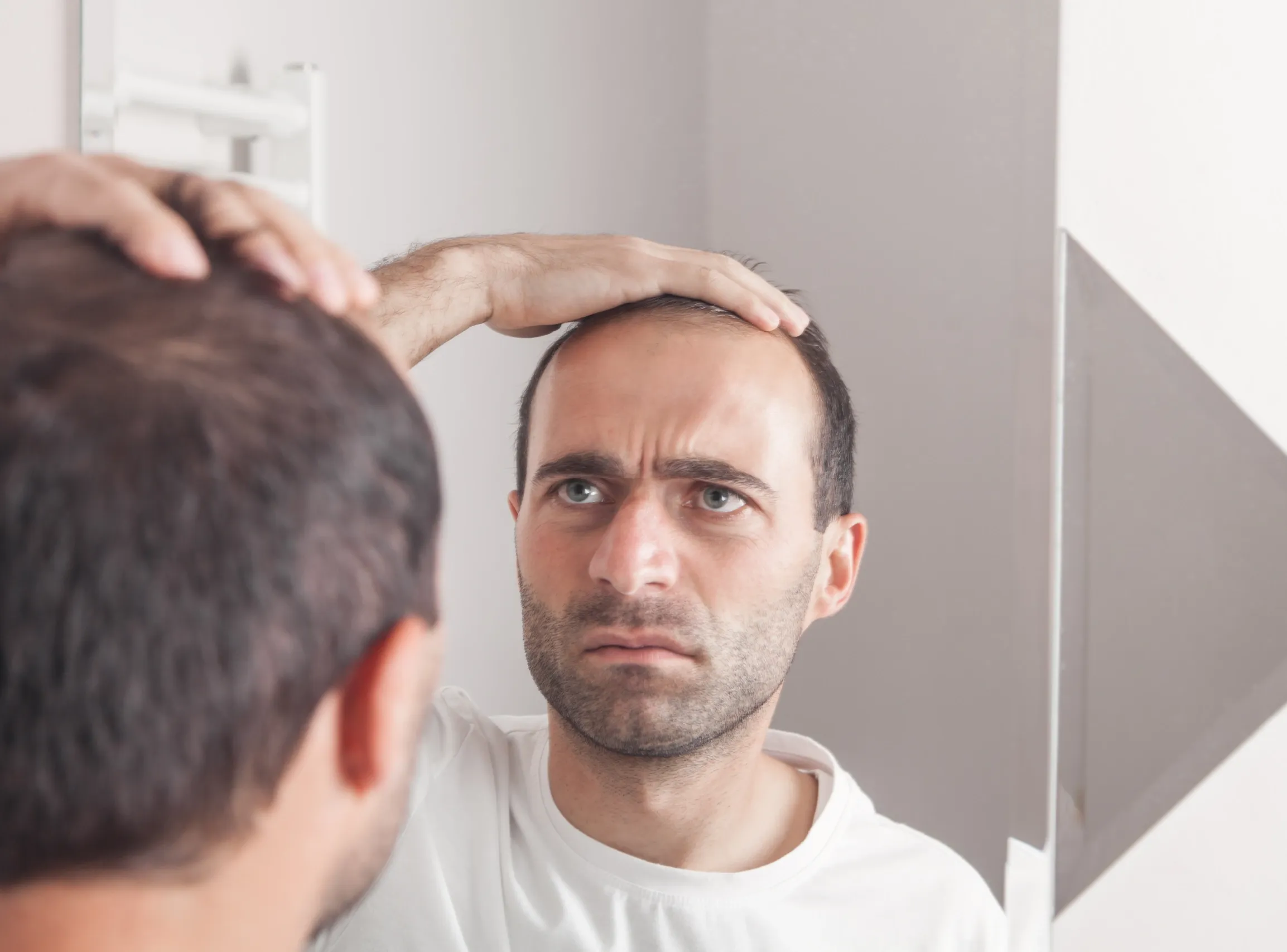
You probably noticed it gradually — more hair on the pillow, a widening part, a softening temple, scalp showing under bright light. Most patients arrive at our Big Pine Key clinic after months of quiet worry. Hair loss is one of the most common concerns we treat at Florida Keys Primary Care & Wellness regenerative treatments program, and it affects both men and women across the Middle and Lower Keys.
Most thinning is androgenetic alopecia — the hereditary, hormone-driven pattern hair loss that affects roughly half of men by age 50 and 40% of women by age 60. Other common drivers include thyroid imbalance, postpartum changes, perimenopause, low testosterone, iron deficiency, stress, and certain medications. Because the underlying cause matters, we evaluate hair loss as a medical question first, then build a treatment plan that may combine medical-grade hair restoration with hormone optimization when hormones are the driver.
Earlier treatment means better outcomes. Miniaturized follicles can be reactivated; long-dormant ones cannot be recovered, even surgically.
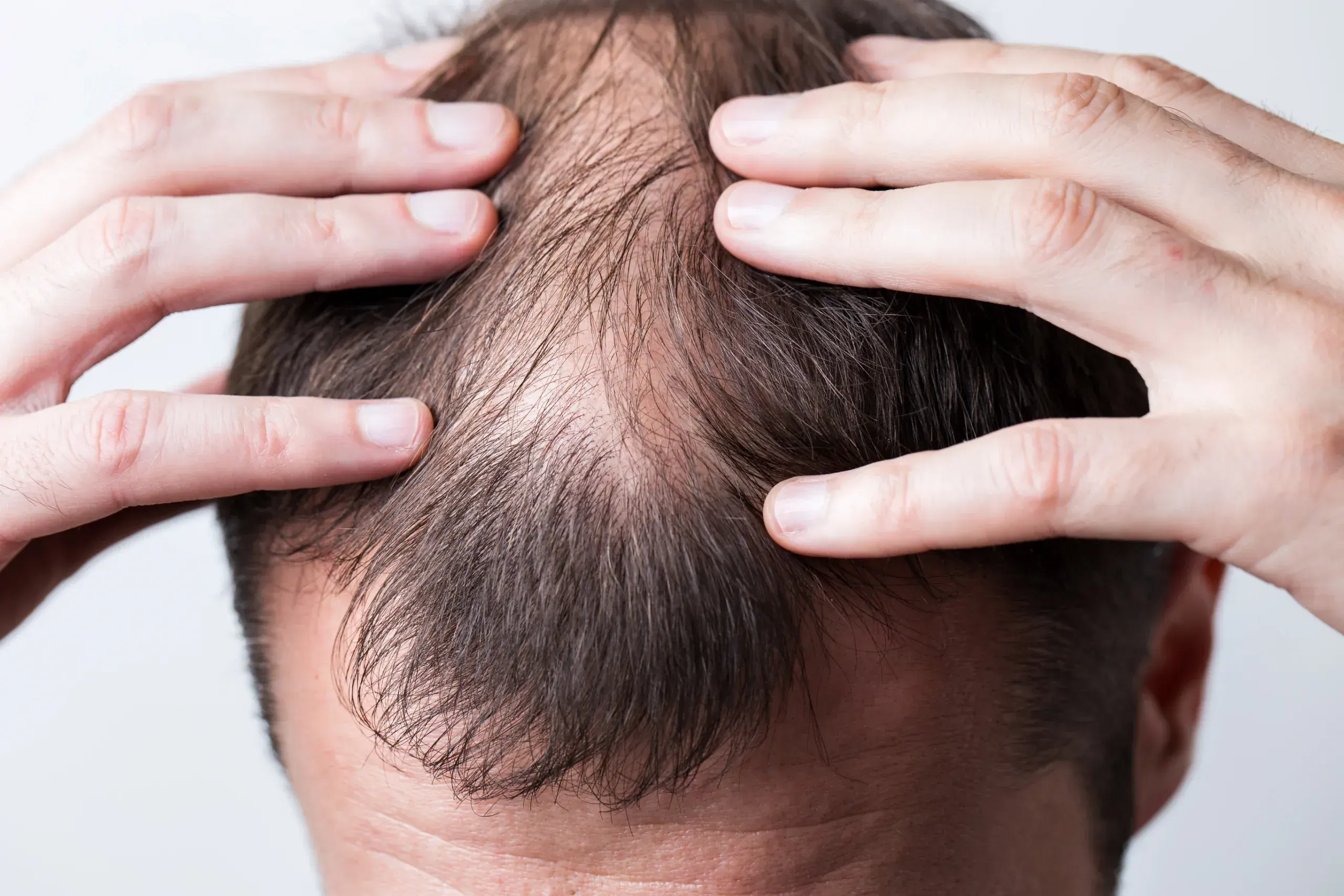
Hair grows in three phases: anagen (active growth, 2–7 years), catagen (short transitional), and telogen (resting before shedding). About 90% of scalp hair is in anagen at any moment. Hair loss happens when too many follicles enter telogen at once, anagen shortens, or follicles miniaturize and produce thinner, shorter, less pigmented hairs over time.
The two most common patterns are androgenetic alopecia — genetically programmed and driven by dihydrotestosterone (DHT) — and telogen effluvium, a temporary shift triggered by stress, illness, surgery, postpartum changes, rapid weight loss, or new medications. Telogen effluvium often resolves once the trigger is addressed; androgenetic alopecia progresses slowly without intervention.
For women, hormonal transitions are often a major contributor. Hormonal imbalance, menopause and perimenopause all affect estrogen and androgen ratios in ways that change hair density. For men, low testosterone can paradoxically coexist with pattern hair loss because peripheral conversion of testosterone to DHT continues to drive miniaturization at the follicle level.
The right treatment depends on which pattern you have. Androgenetic alopecia is predictable — receding temples and crown thinning in men, diffuse thinning across the central part with a preserved frontal hairline in women. It progresses slowly and responds best to long-term treatment with FDA-cleared topicals, oral medications, and PRP-based regenerative therapy.
Telogen effluvium shows up as sudden diffuse shedding two to three months after a trigger — handfuls of hair in the shower. It usually self-corrects within six to nine months once the trigger is addressed, and we can speed recovery with targeted nutritional and regenerative support.
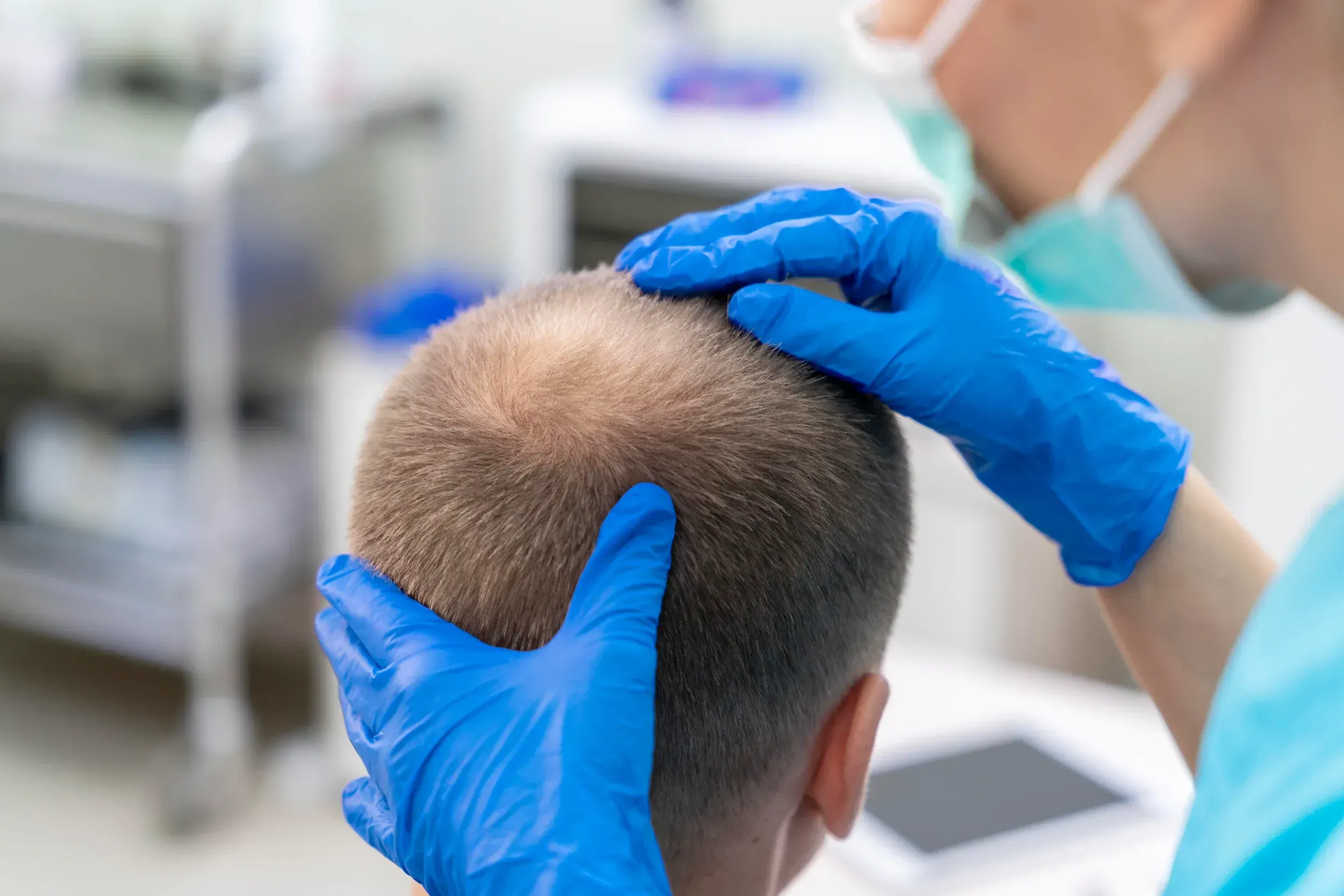
Hormonal hair loss is slower and less dramatic but harder to reverse without treating the underlying imbalance. Lab work is essential — thyroid panels, ferritin, vitamin D, complete metabolic panel, SHBG, free and total testosterone, DHEA-S, and estradiol all help pinpoint the cause. According to the National Institutes of Health, accurate diagnosis is the foundation of effective hair loss treatment.
| Treatment | Best For | Session Time | Results Timeline | Maintenance |
|---|---|---|---|---|
| Hair Restoration (PRP-Based) | Pattern hair loss, miniaturized but living follicles | 45-60 minutes | 3-6 months for visible regrowth | Series of 3-4 sessions, then annual touch-ups |
| Hormone Replacement Therapy | Hormonal hair loss in perimenopause, menopause, andropause | Varies by protocol | 3-6 months for hair changes | Ongoing under physician supervision |

Explore the regenerative and wellness treatments we use to restore hair growth.



The most common causes are genetic pattern hair loss, hormonal changes (perimenopause, postpartum, low testosterone, thyroid disorders), nutritional deficiencies (especially iron and vitamin D), stress-related telogen effluvium, certain medications and autoimmune conditions. Most patients have more than one cause, which is why a medical workup is so important.
Yes, for the right candidate. PRP (platelet-rich plasma) hair restoration is most effective for early to moderate androgenetic alopecia where follicles have miniaturized but are still alive. Multiple peer-reviewed studies show significant improvement in hair density and thickness with a series of treatments. It does not work for follicles that have been dormant for many years.
Most patients see best results with an initial series of three to four sessions spaced four to six weeks apart, followed by maintenance every six to twelve months. Visible regrowth typically appears around the three-month mark and continues improving for nine to twelve months.
Often, yes, especially when the underlying hormonal imbalance is corrected early. Thyroid optimization, hormone replacement during perimenopause and addressing low testosterone can significantly improve hair density. Combined with PRP-based regenerative therapy, results are usually better than either approach alone.
The patterns are different. Men typically lose hair from the temples, hairline and crown, often progressing to extensive bald areas. Women usually experience diffuse thinning across the central part with the frontal hairline preserved. Hormonal drivers also differ, which is why treatment plans are individualized.
As soon as you notice consistent shedding or thinning. Hair follicles that have miniaturized respond well to treatment. Follicles that have been dormant for many years cannot be reactivated, so earlier intervention significantly improves outcomes.
Telogen effluvium is sudden, diffuse shedding triggered by stress, illness, surgery, postpartum changes or new medications, and usually resolves within six to nine months. Pattern hair loss (androgenetic alopecia) is gradual, follows a specific pattern, and progresses slowly without treatment. Lab work and physical exam help us tell them apart.